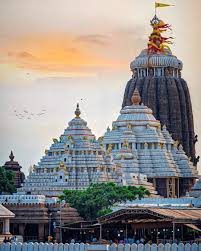
Right from the dawn there are throngs of people ready to move into the Jagannath temple. There are people of all age group in the crowd. Right from 14-year-old to 80-year-old. They are excited to get a glimpse of Lord Jagannath. Lord Jagannath is the presiding deity of Jagannath temple. Along with Lord Jagannath are Subhadra and Balabhadra. For centuries (since 12th century) the temple has attracted devotees, especially from the Vaishnava sects since Lord Jagannath is a form of Vishnu.
Cries of Jai Jagannath fill the air from time to time. The precincts of Jagannath temple fill a person with reverence for deities that are housed here. You will find a towering main structure in the centre. The structure houses the presiding deity of Lord Jagannath. Besides the presiding deity of Lord Jagannath, you have plenty of other temples.
It is said that there are endless Avatars of Vishnu. And the many temples vindicate this truth. So, around central structure you will find temples of Ganesh, Mahalaxmi, Anantanarayan, Narsingh, Vamana and countless others. These deities are considered subsidiary to Lord Jagannath. And that is why they are housed in small structures around main structure.
But there is a deeper significance of these smaller temples. These temples serve as places of worship when the presiding deities are not there. During Jagannath Yatra, the presiding deities are taken out of temple. Lord Jagannath resides in Gundicha temple for a certain period. And Lord Jagannath is on bed rest for 14 days when he falls sick after taking a bath. During all these times, worshippers can still offer prayers to the subsidiary deities.
Rituals performed in Jagannath Puri
There are mandaps constructed inside the precincts of the temple to perform rituals. ‘Snan Mandap’ is where Lord Jagannath is given a bath. This ritual happens once a year. And after this Lord Jagannath catches cold. According to the traditional customs, Lord Jagannath gets ‘medical attention’. There are physicians who will attend to the Lord during the 14 days he is unwell.
Locals say that people in Puri also fall sick during these 14 days. It seems that Lord Jagannath has a lot of influence on people not only in Puri but also the entire state. There is a huge LED board set up outside the temple. The board announces the ritual being performed in sanctum sanctorum.
The first ritual performed is Mangal Arti at 5am. The main hall is packed with devotees. You will find religious fervour reaching a crescendo as temple priests sing the praise of Lord Jagannath amidst playing of kartal and dholak. The tempo of kirtan picks speed or slows down and devotees join by clapping their hands. Sandhya Arti is the last ritual performed in the temple. After this, the Lord is said to go to sleep.
Lord Jagannath is treated like a living entity. This is typical of Bhakti tradition where God is supposed to have human qualities. But even though God has human qualities, He is not per se human. Chaitanya Mahaprabhu who resided in Puri for quite sometime gave the philosophy of Achintya Bhed Abheda or inconceivable diffference and oneness. God takes a human Avatar only redeem mankind.
Replacing the wooden idols of Lord Jagannath, Subhadra and Baladev.
Since God has taken a human avatar, He also gets old. Whether it is Krishna or Rama, they grew old and died. Perhaps Nabakalebar ceremony is symbolic of this. In this ceremony, the old worn-out wooden idols of Lord Jagannath, Subhadra and Balabhadra are buried in a dedicated space. The ceremony takes place every 12 years. A priest can perform the ceremony once in his lifetime. Koili Vaikuntha is the place within temple where burial is given to the old idols. Vaikuntha is a Sanskrit word meaning abode of God. Newly carved fresh idols are placed in the sanctum sanctorum after this.
While the wooden idols are replaced there is a material called tattva padartha which remains untouched. According to belief, this material will never deteriorate. Many say it is the heart of Krishna.
Mahaprasad: The divine food
Worship is not possible with an empty stomach. So, equal significance is given to consuming food. But the food in temple is not ordinary food. It has been given the epithet of mahaprasad. Delicacies offered to Lord Jagannath becomes mahaprasad for devotees. These are consumed with relish. There is a mahaprasad partaking hall in the temple. Don’t be surprised to find youngsters consuming loads of rice after having darshan of Lord Jagannath.
Ananda Bazaar: Buy Mahaprasad
Your family, friends and neighbours also deserve their share of Mahaprasad. Ananda Bazaar within the temple premises sells all the delicacies offered to Lord Jagannath. You can pack delicacies made with rice and coated with sugar for them. The most popular delicacy sold here is khaja. You will find it virtually everywhere in Puri and Ananda Bazaar is not an exception. The word literally means ‘eat me’. The sweet dish is prepared with refined flour and ghee. There are countless other dishes sold in Ananda Bazaar. You will get them in traditional palm leaf mini-baskets.
Reaching Jagannath Puri
Puri is the last station in Eastern Railways. There are direct trains to Puri from all metropolitan cities. Purushottam Express, Neelanchal Express, Jammu Tawi Express, Utkal Express to name a few.
But Tejas Rajdhani is a better option. Tejas Rajdhani will take you to Bhubaneshwar. Tejas Rajdhani is bit costlier but its on-time performance makes it more reliable. From Bhubaneswar you may reach Kalpana Bus Stand. Buses to Puri ply every 30 minutes. You can reach Puri in just about 2 hours.
Staying at Jagannath Puri
Living on the Marine Drive – Similar to the Marine Drive in Mumbai, Puri has a Marine Drive. If you want to be close to the sea beach, the hotels and lodges on Marine Drive are the best choice.
Living on the Grand Road – If you want to stay at a walking distance from Jagannath temple, you may choose Grand Road. There are many cheap options like Bhakta Niwas (devotee lodges) available. But you will also find a decent hotel room if you are ready to spend Rs 2000 per night.
Having a Darshan of Lord Jagannath
I recommend that you wake up early in the morning. Devotees reach the temple at around 2 am. Make sure you do not carry camera, bag or mobile phone. Because cameras, bags and mobile phone will have to be deposited. There are many private stands which will charge you Rs 40 for depositing a camera or mobile phone. The one run by Jagannath temple administration is free of cost.
The entry starts at 5.30 am. To manage the crowd, visitors are given entry in batches. You may get an early entry if you’ve been waiting from the wee hours. Once inside the precincts of the temple, you will have to queue up again for entering the main hall. Again the entry is in batches to manage the crowd. Once inside the hall, you will be asked to sit down and listen to the kirtan. After the Arti, the doors of sanctum sanctorum opens and entry begins.
Moving around in Puri
- Take a tempo – Tempos will take you to places located close to Puri and inside Puri. They will charge you Rs 800 for taking you to Sakshi Gopal or Rs 1000 for Konark.
- Hire a scooty – Hiring a scooty will be a cheaper option. You may get a scooty at Rs 500 per day. You will have to get a refill at petrol pump.