Nature has endowed us with the power to analyse and absorb facts. Our brain is capable of processing information. This is what gives us awareness. But are we overestimating our capacity to gain knowledge? Of course, every person has his or her own IQ. Keeping that aside, should we be so proud of our thought process?
Even chimpanzees possess genuine capacity to recognise things. They are able to deal with their lives with the limited amount of reasoning capacity they have. Strictly speaking, no one is ignorant or fully knowledgeable. But there is nothing like absolute ignorance or absolute knowledge. The knowledge we have today may become redundant tomorrow. A person whom we consider ignorant may possess some relevant skill.
Are knowledge and ignorance an illusion? Few of us may become deluded that they know a lot. But what they know is just a minute fraction or even less.
Spiritual saints who had direct experience
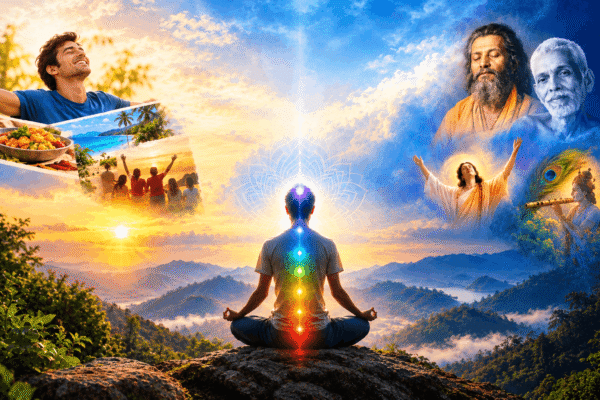
India has many spiritual saints like Ramana Mahrishi, Neem Karoli Baba or Ma Anandmayi who didn’t have any kind of formal education. But they were enlightened in many ways. They learnt from direct experience. Bookish knowledge didn’t mean anything Ramakrishna Paramhansa who was illiterate. Even his wife, Sarada Devi, was not educated.
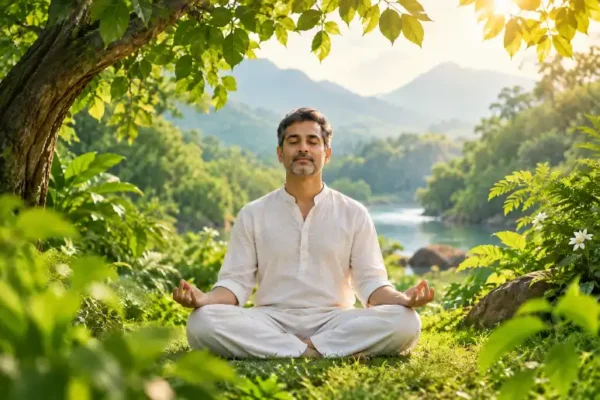
Deep meditation helped these saints become self-realised. The firm belief of these spiritual saints came from the direct experience they gained with their meditative practices.
Detachment from the feeling that we know
There is nothing wrong in gaining knowledge. But we shouldn’t be attached to this knowledge. Even our ancient Vedas taught us to accept knowledge from wherever it comes. The Rig Veda said, “Let noble thoughts come from all directions.”
The emphasis here is on thoughts. We must be open to ideas. Socrates recommended us to question everything; even what we consider as facts. Socrates countered all established beliefs with questioning.
Knowledge and ignorance are relative concepts. You can’t claim to have an ultimate knowledge. Astronomers may study about celestial bodies. But they don’t have a direct experience of weightlessness. Astronauts have never studied movement of celestial bodies but they have experienced weightlessness.
True knowledge requires you to be humble
The more you know, the more you know that you don’t know. A truly wise person wouldn’t be proud of what he knows. He would be humble. Humility shouldn’t be considered cowardice or meekness. It takes real character to be humble.
Mahatma Gandhi once famously said, “Humility is a strange thing. The moment you think you have it, you lose it”.
Perfection in any discipline requires us to be humble. We have to accept a Guru. And perhaps take Diksha and go through rigorous training before we can become perfect. A haughty or self-conceited person can’t aim to become perfect in any discipline.
Even meditative practices which help us gain knowledge about our true self require us to be humble. You will have to surrender the concept that you are this mind, body or ego. Only then will you be able to transcend them.
Distinguish Between Reality And Illusion
Having possessed a human mind, it is important that we understand the difference between reality and illusion. What we are perceiving through our senses can be said to be an illusion. In other words, we are not what our mind “thinks”.
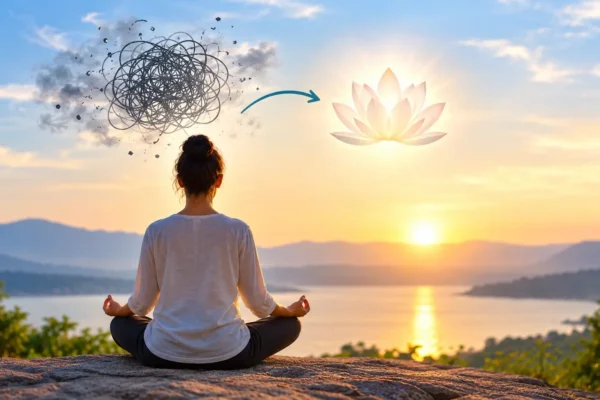
Our reality is beyond the comprehension of our senses. This requires some insight. It can’t be summed up in what we know or what we don’t know. We can get a glimpse of Brahman, the ultimate reality, through meditation only.
Higher Knowledge: Above Sattvic & Tamsic
Ignorance, according to Hindu philosophy, is of a tamsic or negative nature. Knowledge is sattvic in nature. But the real challenge is to attain the higher knowledge. This higher knowledge consists of the knowledge of our true self.
Athato Brahma Jigyasa is an aphorism found in Brahma Sutras. The literal translation is the inquisitiveness about ultimate reality. Knowing about ultimate reality is not as simple as going through a book. This requires a burning desire to understand the real nature of things.
You must be even ready to give up your own life to get that insight. Chaitanya Mahaprabhu and Ramakrishna Paramhansa were so eager to get the direct experience that they would go without food for days.
Conclusion
A deeper enquiry will only lead us to gain higher knowledge. The method of Ramana Maharshi was to keep asking ourselves the question “Who Am I”. If we persist and persevere, the true self will reveal itself. But as said, it requires a burning desire to understand the real nature of things.